
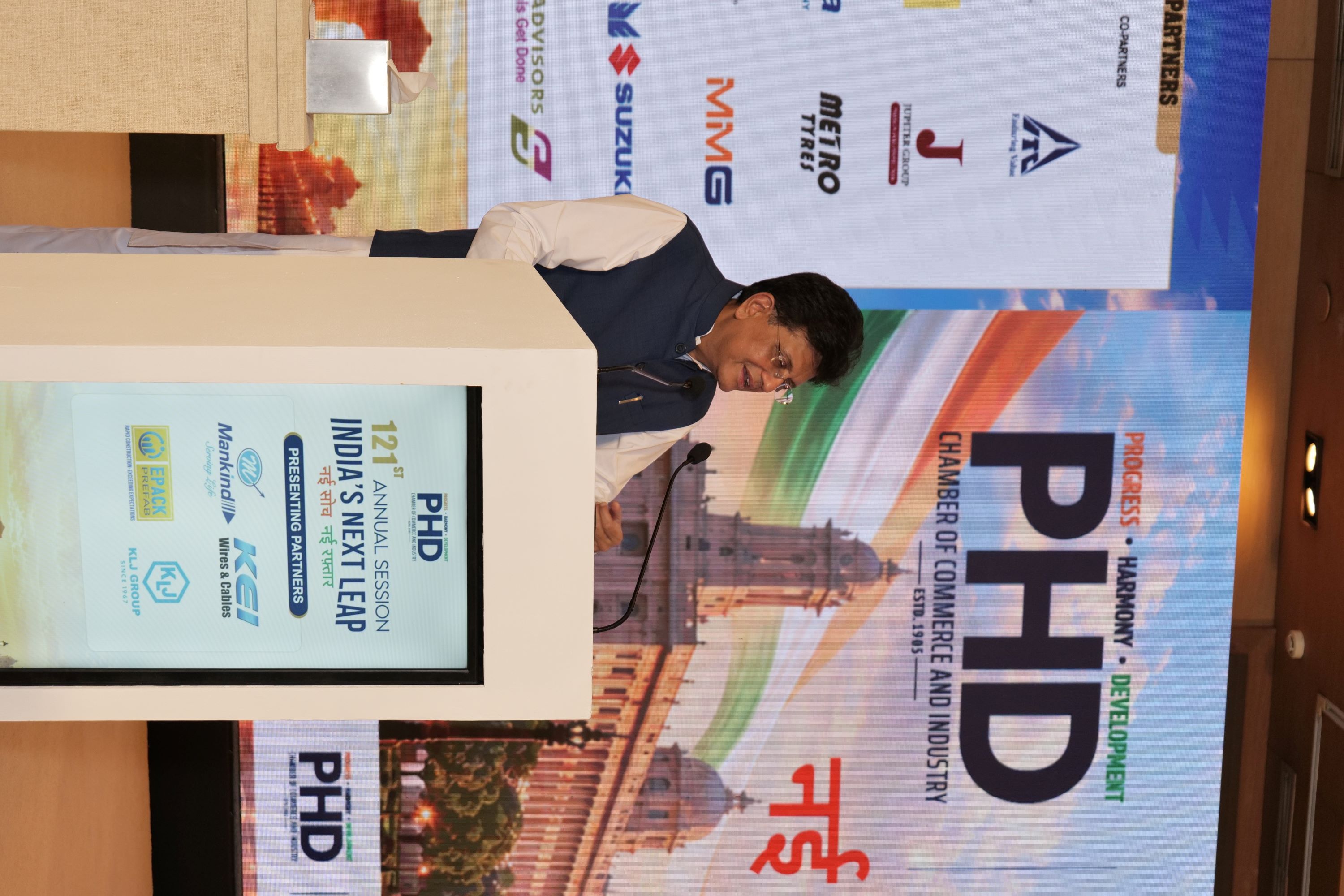
10th October 2025, New Delhi: Delivering a motivating address at the 121st Annual Session of the PHD Chamber of Commerce and Industry (PHDCCI), Shri Piyush Goyal, Hon’ble Union Minister of Commerce and Industry, Government of India, congratulated the PHDCCI on completing 121 years and highlighted India’s economic transformation, growing global role and ambition to emerge as a trusted partner in international trade.
Emphasising the importance of converting adversity into opportunity, he underscored the need for convenient action, nimble thinking and timely decision-making to sustain growth, strengthen competitiveness and unlock new avenues for businesses.
The Minister highlighted India’s demographic strengths, expanding domestic consumption, skilled talent pool and adoption of modern technologies as important drivers of the country’s growth story. As a young nation and one of the world’s fastest-growing major economies, India is positioned to expand its contribution to global value chains, attract investment and develop new areas of economic activity.
Highlighting the importance of international economic engagement, Shri Goyal emphasised that trade agreements can create opportunities for Indian businesses to access new markets, diversify exports and strengthen integration with global supply chains. The signing of the India–UK Comprehensive Economic and Trade Agreement marks an important development in India’s trade engagement with the United Kingdom.
India’s ongoing and prospective trade negotiations, including engagement with Canada, reflect the broader objective of expanding market access and establishing mutually beneficial economic partnerships. Such agreements must translate into tangible opportunities for Indian industry, exporters, farmers and MSMEs while taking account of the interests of domestic stakeholders.
The Minister stressed the importance of consultations with MSMEs, farmers, industry representatives and other stakeholders in shaping trade and development priorities. Their participation is essential to ensure that the benefits of international trade reach businesses of different sizes, support employment generation and strengthen domestic productive capacity.
India’s aspiration to become a US$ 10 trillion economy will require sustained investment, higher productivity, technological advancement, innovation and a competitive manufacturing and services ecosystem. Achieving this ambition will depend on expanding productive capacity, improving the ease of doing business, strengthening infrastructure and enabling enterprises to scale up.
The Minister highlighted export expansion as a central component of this growth trajectory. Building on India’s export performance in recent years, the country aims to increase its global market share, diversify its export basket and strengthen the competitiveness of Indian products and services.
India’s stated ambition of reaching US$ 1 trillion in exports in FY 2026–27, with a targeted growth rate of 15%, underscores the importance of market diversification, quality improvement, reliable delivery, technology adoption and stronger participation in global value chains. Progress towards this objective will require coordinated efforts by the government, industry, exporters and trade-support institutions.
Attracting foreign direct investment and strengthening India’s position as an international business destination remain important priorities. India’s talent base, domestic market, digital infrastructure and expanding technological capabilities provide opportunities for global companies to establish and expand their operations in the country.
The growth of Global Capability Centres (GCCs) reflects India’s expanding role in knowledge-intensive services, research, technology, analytics and global business operations. The expansion of these centres can support high-value employment, knowledge transfer, innovation and the development of specialised skills.
India’s investment strategy must continue to focus on converting investor interest into productive capacity, technology transfer, employment and stronger domestic supplier networks. A predictable business environment, efficient approvals and effective coordination between government and industry will be important in this regard.
The Minister highlighted the role of modern technologies in improving productivity, enabling innovation and strengthening India’s competitiveness. Wider adoption of digital tools, automation, advanced manufacturing and emerging technologies can help Indian enterprises improve quality, reduce costs and respond more effectively to changing global demand.
Skilling and human capital development will be equally important. As a young nation, India has an opportunity to strengthen its workforce through industry-aligned training, vocational education, reskilling and greater collaboration between educational institutions and employers.
The development agenda must remain responsive to the needs of MSMEs, farmers, workers and emerging industries. Linking skills with actual economic opportunities will be essential to support employment, entrepreneurship and inclusive growth.
India’s experience during the COVID-19 pandemic demonstrated the importance of domestic manufacturing capabilities, resilient supply chains and international cooperation. The development and production of vaccines in India, alongside the country’s vaccination programme and vaccine supplies to other countries, illustrated the contribution that domestic scientific and industrial capacity can make to global public health.
This experience reinforces the wider importance of building reliable domestic supply chains while remaining engaged with international markets. India’s role as a trusted partner will depend on consistent quality, dependable delivery, transparent business practices, technological capability and sustained cooperation with trading partners.
The ambition of reaching a US$ 10 trillion economy requires sustained collaboration among government, industry, MSMEs, farmers, exporters, investors and educational institutions. Timely decisions, nimble policy responses and an enabling business environment will remain important to converting emerging opportunities into durable economic outcomes.
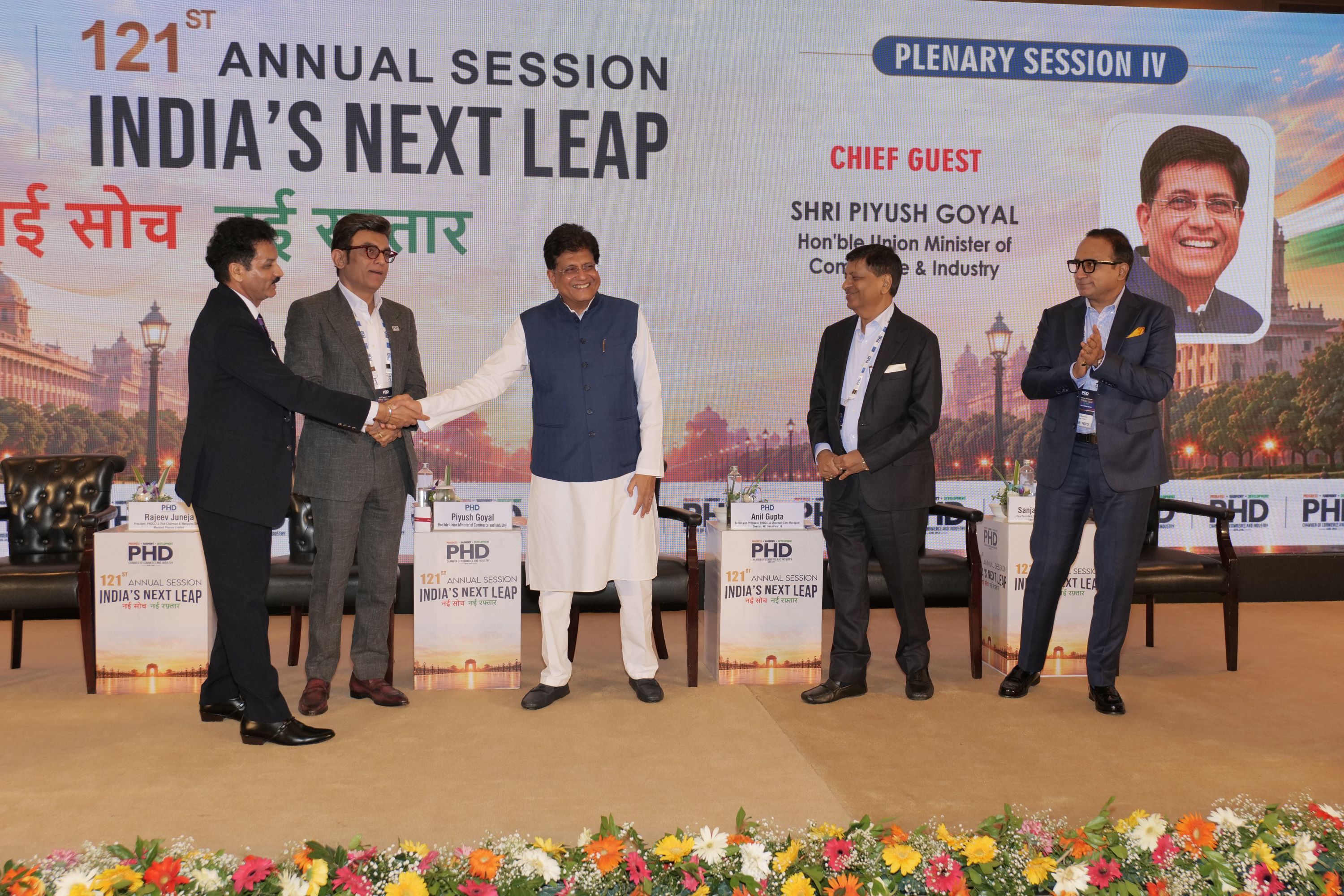
Shri Rajeev Juneja, President, PHDCCI formally welcomed Shri Piyush Goyal, Hon’ble Union Minister of Commerce and Industry, Government of India and said that PHDCCI is one of the oldest chambers of commerce representing MSMEs and its a real honour to have Shri Piyush ji on this occasion. PHDCCI is the “VOICE” of trade and industry, boosting MSMEs, Start-ups and technology alike.
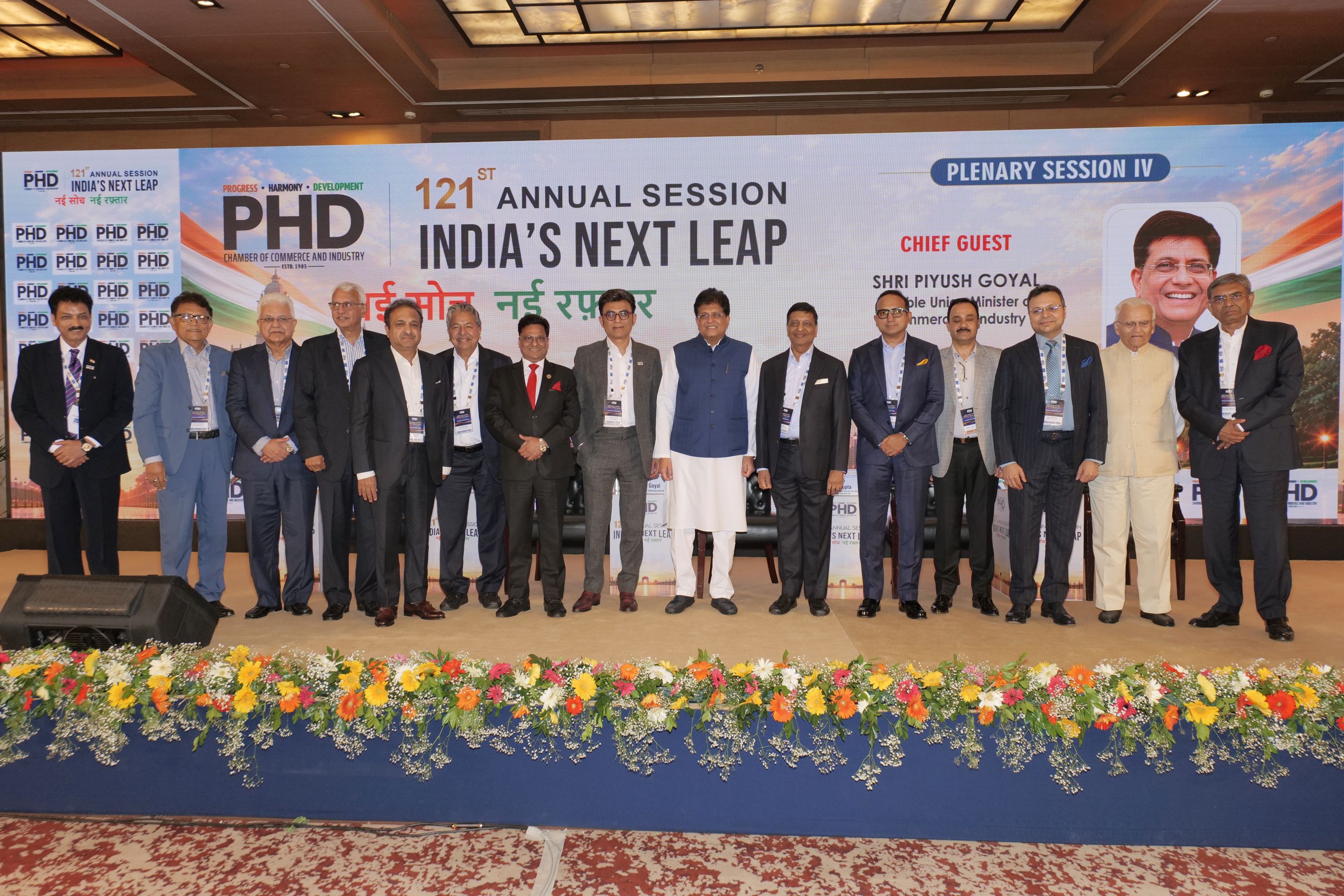
Shri Anil Gupta, Vice President, PHDCCI delivered the vote of thanks. The occasion was graced by Shri Sanjay Singhania, Vice President, Dr Ranjeet Mehta, CEO & Secretary General, PHDCCI, along with President and Vice President, PHDCCI; former Presidents, members of the Managing Committee, industry stalwarts, diplomats, and members of the media.