
Written by Linh Tran, Market Analyst at XS.com
Gold opened the week by setting a new record high near USD 4,630/oz, before temporarily retreating to the USD 4,588/oz area during the Asian session this morning (at the time of writing). This price action has unfolded against a backdrop of global markets remaining highly sensitive to macroeconomic and policy-related risks. What forces pushed gold to a historic high, and what does the current pullback actually reflect?
Gold’s rally reflects rising macroeconomic uncertainty, as investors’ demand for protection has outweighed pure interest-rate considerations.
Geopolitical tensions show little sign of easing, while economic risks – particularly those linked to U.S. trade policy and tariffs – continue to generate headlines capable of shifting market expectations within a short time frame. In such an environment, gold is not only being bought as a traditional safe-haven asset, but is also serving as a hedge against risks that are difficult to quantify.
From a U.S. macro perspective, recent data continue to support the narrative of a controlled cooling in the American economy. The latest labor report showed Non-Farm Payrolls rising by just 50,000 jobs, below expectations, pointing to a slowdown in hiring momentum. However, the unemployment rate fell to 4.4%, while average hourly earnings still increased by 0.3% m/m, suggesting that the labor market is not weakening in an uncontrolled manner. At the same time, the preliminary University of Michigan survey indicated that U.S. consumer inflation expectations remain at 4.2%, a level high enough to prevent the Fed from adopting an overly dovish stance in the near term.
This combination cooling growth and labor conditions alongside persistent inflation expectations has placed the Fed in a cautious policy position. There is little justification for further tightening, but also insufficient room for aggressive easing. As a result, real interest rates are unlikely to rise sustainably, while the U.S. dollar lacks the momentum to establish a long-term bullish trend. Structurally, this creates a favorable environment for gold, especially as global investors continue to prioritize capital preservation over yield generation.
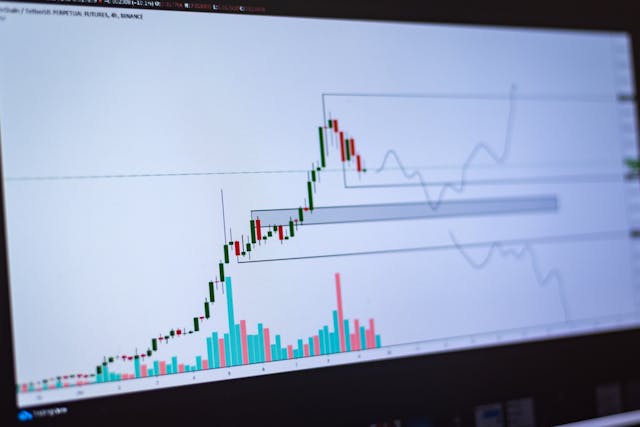
Why, then, did gold pull back immediately after reaching the USD 4,630 peak? In my view, the retreat toward USD 4,588 is driven more by technical and psychological factors than by any shift in fundamentals. After a series of consecutive record highs, the market entered a short-term overbought condition, making profit-taking almost inevitable – particularly from short-term traders and funds rebalancing their portfolios. At the same time, the market has entered a “confirmation-waiting” phase, as investors look for upcoming inflation data and further guidance from the Fed before being willing to pay even higher prices for gold.
Importantly, this correction has not been accompanied by a meaningful change in the broader macro backdrop. Policy risks, geopolitical tensions, and the overall level of global uncertainty remain elevated. In such periods, gold often does not require a specific negative headline to retain its appeal. As long as monetary and economic policy signals remain unclear, defensive demand alone can be sufficient to keep prices elevated.
From a personal perspective, I view the current pullback as a healthy cooling phase rather than a signal of a long-term reversal. A sustainable uptrend rarely moves in a straight line; it requires periodic corrections to absorb supply and re-establish balance.
As long as macro uncertainties persist, the Fed remains constrained by the inflation narrative, and broader risks have yet to be clearly resolved, gold retains a solid foundation to maintain its role as a strategic safe-haven asset. In this context, short-term pullbacks should be seen primarily as part of the trend-consolidation process.
That said, while the broader outlook for gold remains constructive, prices are now trading at elevated levels, where any shift in inflation expectations, the U.S. dollar, or bond yields could trigger short-term corrections. As such, volatility risks still warrant close monitoring, rather than focusing solely on the favorable side of the trend.