
By Michael Brown, Senior Research Strategist at Pepperstone
DIGEST – A metals meltdown dominated Friday as both gold and silver fell out of bed, though markets elsewhere were relatively unfazed by this, or by Kevin Warsh’s nomination as the next Fed Chair. Another busy calendar awaits this week.
WHERE WE STAND – One month down, eleven to go.
To say January was a rollercoaster ride might well be an understatement. Although, if I were a betting man, given recent form, I’d not wager that the rest of the year will be much calmer.
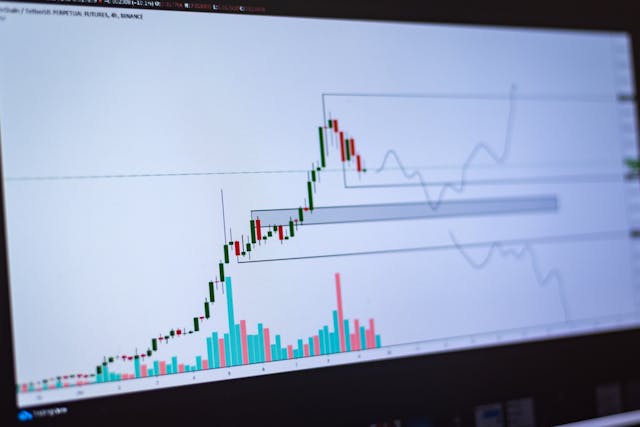
Certainly, the final trading day of January was anything but calm, being dominated by what can only be termed a meltdown in the metals space. In terms of ‘scores on the doors’, spot gold ended Friday with losses of 9%, bullion’s worst day since 2013, and fourth worst in the last 45 years. Silver, meanwhile, shed as much as 35% at the lows, before trimming losses to end the day a still-chunky 26% lower, the worst daily loss ever, at least per Bloomberg data.
It must be said that there was no particularly obvious trigger to kickstart these brutal moves – I’m not going to pin them on the nomination of Kevin Warsh to succeed Jerome Powell as Fed Chair, while other news/data-flow was light at the time things started to roll-over.
That said, once precious metals did start to come under pressure, there were plenty of factors adding fuel to the fire – with both stretched longs bailing out through choice, and leveraged longs being forcibly closed out. In both cases, these actions forced price lower, which triggered further forced selling, resulting in something of a vicious cycle developing. At the same time, nobody sought to ‘catch a falling knife’, resulting in offers being pulled out of the market, further thinning conditions, and amplifying the lurch lower to an even greater extent as liquidity all-but-evaporated.
Obviously, the question everyone is now asking is what happens next? Here, I would flag that in a similar manner to the rally seen in recent weeks, there is now a solid argument that the pullback has also run ‘too far, too fast’. This, at the very least, would suggest that something of a ‘dead cat bounce’ could well be on the cards in the short-term, even if that clearly isn’t what we’ve seen during the APAC session, with both XAU & XAG having notched further losses.
Longer-run, the bull case for precious metals is still a solid one – reserve demand is healthy, retail demand hasn’t gone away, while those seeking an effective geopolitical hedge will still largely flock to the precious metals complex as opposed to the USD or USTs. What will now be key is whether enough froth has been removed from the market, and enough speculative positions washed out, to enable those fundamentals to again take over from price as the main market driver once more. Frankly, only time will tell on that front, and while the case for further upside does continue to hold water, I would still caution that just because something has fallen a long way, in a short space of time, that does not in any way mean that things can’t fall further.
What was arguably most interesting about the breakdown in the metals complex is what didn’t happen. Namely, that the spill-over impact into other asset classes was relatively limited in nature, all things considered.
While we did see a mechanical bid into the greenback, which rallied 1% or so against most peers, and allowed the DXY to retake the 97 figure, moves elsewhere were relatively muted, all told. Stocks were about as unbothered as it’s possible to be, though the S&P did close marginally softer, with the tech sector underperforming. I’d be a dip buyer here, with the bull case still a robust one, and the overall backdrop still about as favourable for risk as one could wish for, with a ‘Trump put’ and a ‘Fed put’ combining with robust economic and earnings growth to continue to tilt the balance of risks to the upside.
Stocks do seem a little shakier early doors this morning, though, so we should keep on the radar the potential for forced selling were higher vol to force participants to take down risk exposure more broadly.
Meanwhile, Treasuries softened, led by the long-end, across a steeper curve, and I’d argue that this latter move is, in fact, a direct reaction to Warsh’s Fed Chair nomination, given his long-standing view that the Fed balance sheet should be shrunk considerably from its current levels. I’m not sure such a shrinkage is really possible in this day and age, however, given the shift to an ample reserves regime, unless you were somehow able to shift MBS holdings elsewhere, say to the balance sheets of the GSEs. Still, that’s something for another time, and in any case Warsh will be just one vote of twelve on the FOMC, meaning that he shan’t be able to enact any rate, or balance sheet, policies unless there is a logical and rational argument in favour of doing so.
That, though, hasn’t stopped President Trump from proclaiming that Warsh will ‘never let you down’, and will go down as ‘one of the great Fed Chairs’. Given Warsh’s chameleon-esque tendencies and recent damascene dovish conversion driven wholly out of political expediency, I can’t help but thinking that Trump’s comments will end up aging like milk.
LOOK AHEAD – It’s shaping up to be another busy week.
On the policy front, the RBA should deliver a 25bp hike on Tuesday, reflecting the resilient nature of the Aussie labour market, as well as elevated inflationary pressures, with swaps discounting around a 70% chance of such an outcome. Thursday’s BoE and ECB should both be more staid affairs, with neither set to make any policy changes this time out.
As for data, Friday’s US labour market report is the obvious highlight, with the economy set to have added +70k jobs in January, and unemployment set to have held steady at 4.4%. While the Fed have now shifted to more of a ‘wait and see’ approach, any signs of renewed labour market softness would likely spur expectations that the FOMC may need to remove a further degree of policy restriction, though the February jobs report is also due before the next confab, and policymakers shan’t over-react to a single data point. Other notable releases this week include a host of PMI surveys, as well as last month’s ‘flash’ eurozone inflation stats.
Besides that, fixed income watchers will have plenty to digest as the Treasury issue the quarterly refunding announcement, with the financing estimate coming today, followed by the issuance breakdown on Wednesday.
Equity participants are also set for a busy week ahead, as earnings season continues. Reports from Alphabet (GOOG/L) on Wednesday and Amazon (AMZN) on Thursday are the obvious standouts, though figures from semiconductor names such as AMD and Qualcomm (QCOM) are also worth paying close attention to, not least considering the increasing scepticism with which participants appear to be viewing the entire AI theme.