
Mumbai, Aug 4: India’s retail market has exhibited a resilient growth momentum amid multiple external factors that could have adversely impacted the demand trajectory. According to data shared by JLL, the demand for retail spaces remained intact between January and June 2026, indicating the sector’s firm footing as it prepares for a new growth phase. The gross leasing volume in India’s 7 markets in H1 2026 posted a total of 6.27 million sq. ft., a 10.5percentage Year-on-Year growth over the H1 2025 total of 5.68 million sq. ft. This marks a significant milestone for the retail sector as H1 2026’s gross leasing activity is the highest half-yearly leasing volume recorded in the past four years.
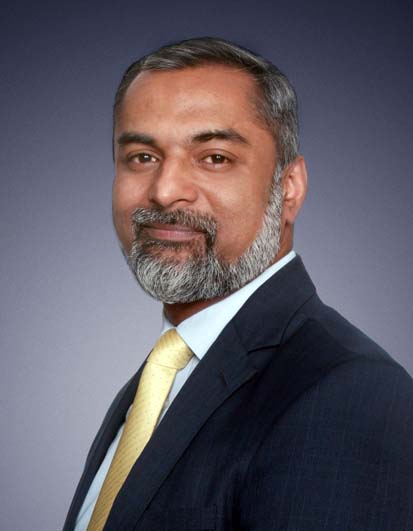
“India’s retail real estate sector is in the resilient growth phase, where demand is surging to record levels, reinforcing the sector’s position as a key driver in the economy. Despite global headwinds and sequential rise in retail inflation between January and June 2026, gross leasing volume across top 7 markets reached 6.27 million sq. ft. in H1 2026, the highest half-yearly leasing activity recorded in four years,” said Saket Amrit, Head-Retail Services, India, JLL.
“With the country’s total shopping mall stock now standing at approximately 92 million sq. ft. and consumer expectations rapidly evolving, developers and occupiers prioritizing quality over quantity and investing in next-generation assets that seamlessly integrate technology, convenience, and immersive, experience-led retail formats. The robust development pipeline of over 45 million sq. ft., expected by 2030, positions the sector for its next phase of sustainable, institutionally backed expansion, powered by strong domestic consumption, ambitious retailer expansion plans and an accelerating shift toward high-quality retail destinations that cater to India’s increasingly discerning and affluent consumers,” he added.
In line with the cyclical trends associated with the opening quarter for any calendar year, Q1 2026 witnessed gross leasing of 3.09 million sq. ft. as retailer expansion continued amid tight supply conditions. Leasing momentum strengthened in Q2 2026 , with volume rising by 2.7% sequentially to 3.18 million sq. ft. This sustained demand performance was due to continued retailer expansion across retail formats, driven largely by domestic brands, which accounted for 79.1% of the total leasing.
While the new shopping mall supply remained limited in Q2 2026, availability of new retail spaces in peripheral precincts of Delhi NCR and Hyderabad provided expansion opportunities for retailers looking to expand physical store footprint. Overall, new shopping mall supply in H1 2026 totalled 0.82 million square feet, representing a 64% y-o-y decline from the robust supply recorded in H1 2025. With these latest additions, India’s total shopping mall stock now stands at approximately 92.08 million square feet.
For the past six to nine months, top retail brands have been struggling to expand due to lack of quality spaces in shopping malls driving them to evaluate alternate formats for store expansion. Despite moderated supply additions, healthy demand led the vacancy levels in shopping malls across the top seven cities to decline by 45 basis points (bps), from 11.60% in H1 2025 to 11.15% at the end of H1 2026. At the pan-India level, demand for organized retail spaces has strengthened on the back of experience-driven retail preferences by the consumers, with malls increasing their share in overall gross leasing from 38.9% in H1 2025 to 43.1% in H1 2026. Leasing volume in shopping malls grew by 22.4% y-o-y, underscoring retailers’ growing preference for premium and organised retail environments.
Across India’s top seven cities, Mumbai and Delhi NCR comprised more than half of the H1 2026 leasing volume. Coupled with Bengaluru , these three markets anchored the total demand for retail spaces, collectively accounting for more than 75% share, underscoring retailers’ continued preference for established, high-consumption retail markets. Kolkata emerged as a key growth market, with leasing volumes surging 87.3% y-o-y following the completion of a new mall in Q1 2026. Delhi NCR and Mumbai also recorded strong leasing growth of 75.9% and 69.6%, respectively, driven by sustained occupier expansion, while Bengaluru, Hyderabad and Chennai witnessed a moderation in leasing activity.
Mumbai and Delhi NCR accounted for 53% of H1 2026 leasing volume
Fashion & apparel and food & beverage remained the largest contributors to retail leasing activity in H1 2026 followed by the entertainment segment’s share in total leasing at 16%. Entertainment segment’s share in gross leasing increased from 12% in H1 2025 to 16% in H1 2026, supported by a 41.5% y-o-y rise in space take-up. This growth was largely driven by family entertainment centres, including bowling alleys, gaming zones, and children’s play areas, highlighting the growing importance of this segment. In contrast, the daily needs and grocery segment witnessed a stark 39% decline in leasing volume, primarily due to the rapid expansion of quick commerce and dark store networks.
Domestic retailers continued to dominate leasing activity in H1 2026, accounting for 79.1% of total gross leasing. While the pace of entry of new international brands moderated during the period, expansion by well -established international brands in the country remained steady, with gross leasing increasing 62.1% year-over-year.
New international brands entering India during H1 2026 were concentrated in the food & beverage, fashion & apparel, footwear, and bags & accessories segments. Despite global economic dynamics, retail demand fundamentals in India remained resilient, with continued expansion by both domestic and international retailers reflecting sustained confidence in the country’s retail market.
Despite short-term supply constraints, the real estate sector is well positioned for growth of its organized retail landscape as developers remain committed to developing quality shopping mall infrastructure to attract increased institutional interest in the long term.
Upcoming development pipeline positions the retail sector for long-term growth
Despite short-term supply constraints, the real estate sector is well positioned for growth of its organized retail landscape as developers remain committed to developing quality shopping mall infrastructure to attract increased institutional interest in the long term.