
Mumbai, Sep 8: Indian stock markets came under fresh selling pressure on Tuesday as a sharp rise in crude oil prices and growing geopolitical uncertainty made investors more cautious.
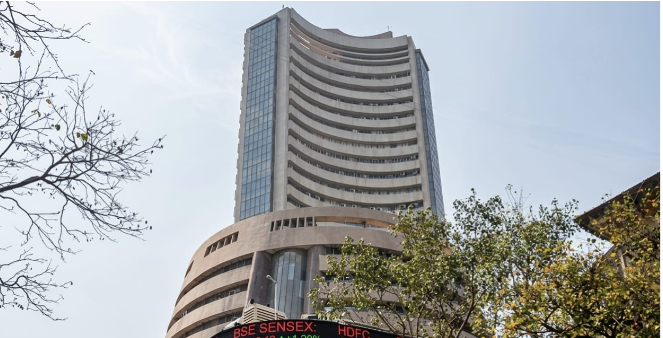
The Sensex fell 555.23 points, or 0.73 per cent, to close at 75,577.58, while the Nifty50 declined 144.05 points, or 0.61 per cent, to end at 23,635.10. Both benchmark indices finished at their lowest levels since mid-June.
The biggest concern for investors was the rise in global oil prices. Brent crude moved close to the $100-a-barrel mark as tensions in the Middle East raised fears of disruption to energy supplies. For India, which relies heavily on imported crude, a prolonged rise in oil prices can increase the import bill and add pressure on inflation and corporate costs.
The impact was particularly visible in financial stocks. Private banks and financial services companies remained under pressure, with stocks such as SBI Life Insurance, ICICI Bank and Axis Bank among the major Nifty losers.
However, the selling was not uniform across the market. Mid- and small-cap stocks managed to stay in positive territory, with the Nifty MidCap and SmallCap indices gaining 0.21 per cent and 0.17 per cent, respectively.
Defence stocks stood out on the positive side, with the defence index gaining around 2.5 per cent after the government cleared major defence procurement proposals. The move provided some support to the broader market even as the benchmark indices remained weak.
The latest decline also reflects growing investor sensitivity to external risks. Higher crude prices can affect sectors such as aviation, paints, chemicals, logistics and manufacturing by increasing operating costs, while financial markets can also face pressure if inflation concerns strengthen.
Market sentiment is therefore likely to remain closely linked to movements in crude oil and developments in the Middle East. Investors will also watch global interest-rate expectations and foreign fund flows for further direction.
For now, the market remains cautious, with investors balancing opportunities in individual sectors against the broader risks created by rising energy prices and geopolitical uncertainty.