
Bhubaneswar, Nov 24 (UDN): The waters across Odisha came alive with the glow of tiny lamps and colourful miniature boats on Tuesday as lakhs of people celebrated Kartik Purnima with the age-old tradition of Boita Bandana, paying tribute to the maritime legacy of ancient Kalinga.
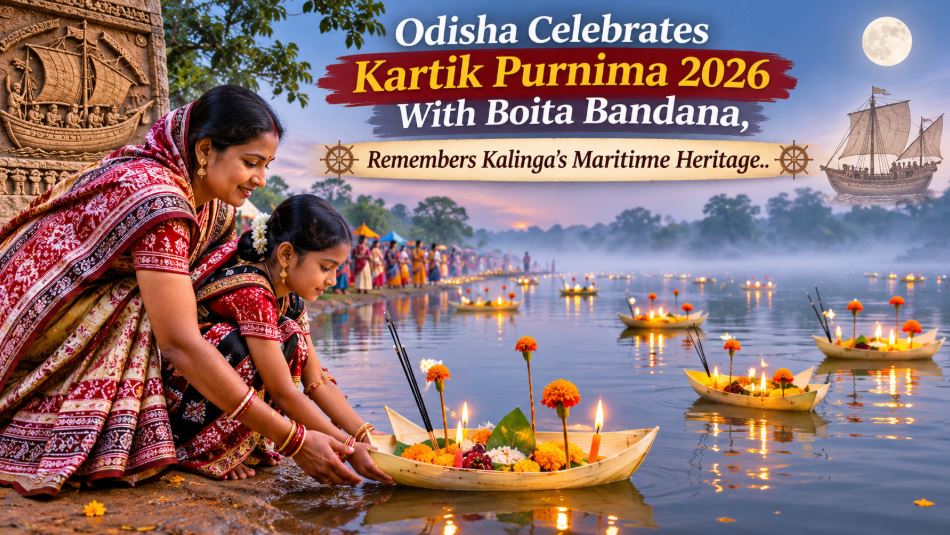
Representational Image
From rivers and temple ponds to lakes and seashores, devotees gathered in large numbers during the early hours to set miniature boats afloat, recreating a tradition deeply rooted in Odisha’s history, culture and collective memory.
Made from banana stems, paper and other materials, the tiny boats were decorated with lamps, flowers and incense sticks before being released into the water. The ritual symbolises the voyages of ancient Odia traders, popularly known as Sadhabas, who once sailed across the Bay of Bengal to distant lands in search of trade and cultural exchanges.
Aa Ka Ma Boi: An Age-Old Tradition Comes Alive
As dawn broke, the familiar chant of “Aa Ka Ma Boi, Pana Gua Thoi, Pana Gua Tora, Masaka Dharama Mora, Boita Bandana Ho!” echoed across several water bodies in the state.
The traditional verse, accompanied by offerings of betel leaves and areca nuts, marked the ceremonial remembrance of the seafaring merchants and their long voyages.
For generations, Boita Bandana has remained an important cultural expression for Odias, connecting younger generations with stories of their ancestors’ maritime achievements.
Bindusagar, Mahanadi Banks Witness Devotee Rush
In Bhubaneswar, Bindusagar in the Old Town witnessed a large gathering of devotees who arrived early in the morning to perform the rituals.
In Cuttack, Gadagadia Ghat along the Mahanadi and Debi Ghat on the Kathajodi River turned into major centres of celebration, with people gathering to float miniature boats and offer prayers.
The banks of the Daya and Kuakhai rivers also witnessed similar scenes, as families and devotees participated in the traditional observances.
At Puri, thousands of people gathered at the sea beach from late Monday night to float their miniature boats into the Bay of Bengal, adding to the festive atmosphere along the coastline.
Balijatra Preparations Add to Festive Spirit
The Kartik Purnima celebrations also coincided with the beginning of the annual Balijatra in Cuttack, one of Odisha’s most prominent cultural fairs.
The seven-day festival commemorates the historic overseas trade journeys of Odia merchants and the cultural connections they established with regions across Southeast Asia.
Balijatra serves as a reminder of Odisha’s historical links with Bali, Java, Sumatra, Myanmar and Sri Lanka, where ancient traders travelled for commercial exchanges and helped build cultural connections.
Remembering the Sadhabas and Their Sea Voyages
The tradition of Boita Bandana recalls a period when Kalinga’s maritime activities played an important role in regional trade.
Ancient Odia sailors, known as Sadhabas, are believed to have undertaken long voyages across the Bay of Bengal, carrying goods and returning with new products, ideas and cultural influences.
An elderly woman participating in the rituals said the festival offered an opportunity to remember the achievements of the state’s ancestors.
“Odia sailors (Sadhabas) used to sail across the Bay of Bengal to distant lands to trade goods and bring back cultural influences. Festivals like Boita Bandana remind us of this glorious past,” she said.
A Festival That Keeps Odisha’s Heritage Alive
Observed every year on the full-moon day of the Hindu month of Kartik, Kartik Purnima holds special cultural and religious significance in Odisha.
Beyond its religious observance, Boita Bandana represents the state’s enduring connection with its maritime past. The simple act of floating miniature boats has evolved into a powerful symbol of cultural identity, historical remembrance and intergenerational traditions.
As thousands of tiny boats drifted across Odisha’s rivers, ponds and coastal waters on Tuesday, the celebrations once again brought alive the memory of Kalinga’s seafaring past, reminding people of a heritage that continues to shape the state’s cultural identity.